

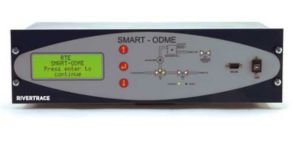
The Oil Discharge Monitoring Equipment (SMART ODME) is a slop water monitor for tankers.
The SMART ODME has been designed to provide means of monitoring, recording and controlling the ballast discharge for crude oil, product and chemical tankers including ICE class vessels.
This system is modular in construction and does not require the usual pump/motor bulkhead penetration as used on older systems.
The SMART ODME includes all components required to meet MEPC 108(49) and the latest MEPC 240(65) for bio fuels, effective 1 January 2016.
The SMART ODME incorporates a ‘simulation mode’ to aid system demonstration to PSC surveyors and is designed for ease of retrofitting, operation, installation and maintenance. Discharge limits are set at 30 litres of oil per nautical mile or 1/30,000 of the previous cargo for slop and wash water discharges.
The Oil Discharge Monitoring Equipment (Smart ODME) has been designed to provide means of monitoring, recording and controlling the ballast discharge for crude oil, product and chemical tankers including ICE class vessels.
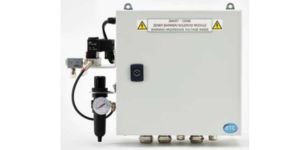
This system is modular in construction and does not require the usual pump/motor bulkhead penetration as used on older systems. The Smart ODME includes all components required to meet MEPC 108(49) and the latest MEPC 240(65) for Bio Fuels, effective 1 January 2016.
The Smart ODME incorporates a ‘simulation mode’ to aid system demonstration to PSC surveyors, is designed for ease of retrofitting, operation, installation and maintenance.
Discharge limits are set at 30 litres of Oil per nautical mile or 1 / 30,000 of the previous cargo for slop and wash water discharges.
Oil Discharge Monitoring Equipment Key Features
- The SMART ODME has been Biofuel Approved in accordance with MEPC.240(65)
- The system has been designed for an easy installation at the yard with only one flow meter and one sample point
- Minimal bulkhead penetration with motor and pump in one location.
- Paddle wheel flow sensor making for simple installation and maintenance
- Calibration Check Kits available for functional testing
- Fleet Deals – Frame Agreements & Exchange Schemes
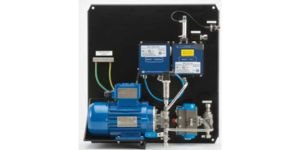
ODME – Oil Discharge Monitoring Equipment
Oil Discharge Monitoring Equipment Application
- Slop Water Discharge
- Tank Wash Water Discharge
- Clean Ballast Water Discharge
Oil Discharge Monitoring Equipment Flexible Solution
- The SMART ODME has been designed in a modules to allow for integration into bespoke ship designs.
- Pneumatic or electric sample pump options
- Fleet Deals – Frame Agreements & Exchange Schemes
Oil Discharge Monitoring Equipment Specification
| MEASUREMENT | |
| Oil types : | As Per MEPC 108(49) + MEPC 240(65) requirements |
| Clean water calibration : | Automatic |
| Oil measurement range : | 0 – 1000 ppm all types |
| Resolution : | 1 ppm |
| Accuracy oil + solids : | As Per MEPC 108(49) requirements |
| DATA STORAGE AND RETRIEVAL | |
| Data retrieval : | via LCD display or download to PC using HyperTerminal or Rivertrace IMO Log downloader programme |
| ENVIRONMENTAL & SAMPLE | |
| Sample Pressure Range | 0.1bar to 5bar |
| Sample Flow Rate | 4Lpm to 5Lpm |
| Sample Temperature | 1⁰C to 40⁰C |
| Ambient Temp Range | -20⁰C to 50⁰C |
| Hazardous Area | VPC is Group II Zone 1G IIB T4 |
| SYSTEM AND SUPPLY | |
| Supply voltage : | 115 / 230V ac, 50 – 60Hz (Switchable) |
| Zener Barrier/Computer Module : | 115 / 230V ac, 50 – 60Hz (Switchable) |
| Motor : | 380-440V ac, 50-60Hz, 3 phase, 250W |
| Supply voltage Consumption : | < 50 VA Single Phase |
| Approvals : | MEPC 108 (49) – DNV, USCG, CCS and NKK. MEPC 240(65) – DNV, CCS and NKK |
This system may be installed in line with any new and existing IMO MEPC 60(33) and 107(49) approved monitors.
Specifications and system descriptions accurate at time of publishing. These are subject to change.
Oil Discharge Monitoring Equipment Service
To ensure the highest precision and reliability of your equipment we highly recommend Annual Calibration.
If your device is registered with the Rivertrace portal, you can request a Calibration Check via the portal.
SMART ODME has a number of service options depending on your company requirements. They are listed below:
Calibration option 1 – Self Annual Calibration Check
- Crew can conduct an annual verification of the system using the Part Number 112777 SMART ODME CALIBRATION CHECK WATER SAMPLE (225mL bottle of 500 PPM) and follow this procedure – SMART ODME Calibration Check Procedure
Calibration option 2 – Rivertrace Engineer Annual Calibration Check
- A Rivertrace Engineer annual calibration and function test by a trained Engineer who will attend the vessel during a port stay and conduct the testing and issue a certificate of verification and testing. You can request that here The Complete Guide to Service Request Submission – Rivertrace
Calibration option 3 – Exchange Process Calibration Check
- The last option is to set up an exchange process whereby you can buy a new measuring cell which will come with a new 5 year factory calibration certificate which can be exchanged by the crew and the old measuring cell can be returned to Rivertrace for recalibration. More information can be found here Smart ODME measuring cell replacement
Oil discharge monitoring
Oil discharge monitoring is a crucial component for efficient operation on board ships, ensuring compliance with the stringent MEPC.108(49) marine environmental regulations. These guidelines mandate the use of advanced Oil Discharge Monitoring and Control Systems on tankers. This oil discharge monitoring equipment is essential for tracking the oil content in slop water discharged into the sea.
By maintaining precise monitoring, ships can efficiently manage oil discharge, minimising environmental impact and adhering to international pollution standards.
The integration of these systems supports automatic data recording, which aids in regulatory audits and reporting processes. Furthermore, by preventing any discharge above regulated limits, these systems help avoid costly penalties, thus preserving the vessel’s operational integrity.
Efficient oil discharge monitoring not only safeguards marine ecosystems but also aligns with sustainable shipping practices, contributing to the overall operational efficiency and eco-friendliness of maritime activities.
Read more :