
HomeOIL SKIMMERBelt Oil SkimmerTote-It Portable Belt Skimmer Application

Tote-It Portable Belt Skimmer Application

An oil skimmer is a machine that removes floating oil and grease from liquid. Specifically, the floating oil adheres to skimming media, such as a belt, tube, rope, mop, or disk. Then, the media runs back to the machine to be wiped clean. Additionally, weir style skimmers use a pump to collect floating oils.

An oil skimmer is a mechanical device designed to remove floating oil from the surface of water or other liquids. Because oil is lighter than water, it rises to the surface — and that’s where skimmers do their job.

Whether in an industrial sump, a coolant tank, or an open body of water after a spill, oil skimmers help separate and recover this surface oil for reuse or disposal. Consequently, this process not only keeps systems clean but also prevents environmental contamination and regulatory violations.

Oil and water mixtures derived from manufacturing processes and food processing facilities that are held in large holding tanks or pits. In these applications, oil is usually removed by an oil skimmer or it can be pumped out for disposal. Skimming the floating oils with little water content can reduce the cost of disposal and lower the contingent liabilities of industrial wastewater discharge.

Tote-It Portable Belt Skimmer Application

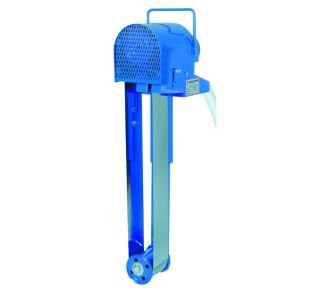
The Tote-It’s patented design is a dependable and effective means of removing free floating oil from water. The single assembly unit can be used in any application where 115 VAC, 60 or 220V, 50 Hz power is available. The Tote-It utilizes a continuous belt and wiper to remove up to 12 gallons of oil per hour from the fluid surface. The belt operates on a motor and pulley system attached to a stabilizer bar that is immersed in the contaminated liquid. After traveling over the head pulley, the belt passes through tandem wiper blades where oil is scraped off both sides of the belt, and discharged through a 1-1/4 in. ID hose.
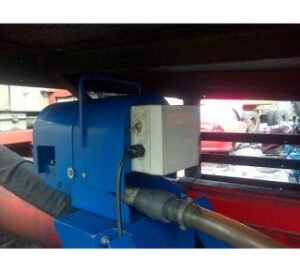
Tote-It Portable Belt Skimmer Process

The tail pulley has flanges which allow it to roll freely on the inside of the belt without becoming dislodged. It does not need to be fastened to the tank. The Tote-It is especially well suited for parts washing and machining center applications. By removing surface oil from a wash tank, the parts will not be recontaminated as they are withdrawn. Removing tramp oil from a coolant tank prevents excessive smoke and fumes due to oil burning during cutting operations. It also reduces bacteria growth in the tank, along with the resulting odor.


Tote-It Portable Belt Skimmer Advantages

Tote-It Portable Belt Skimmer Installation
  • Multiple site usage – easily moved from one place to another.
  • 6 gph removal rate.
  • Can be used in tanks as shallow as a few inches.
  • Requires no tank modifications in most applications.
  • Maintains skimming efficiency in fluctuating fluid levels.
  • Prevents plugging of spray heads and filters.
  • Conserves parts wash water and prevents recontamination of parts as they are removed from wash tank.
  • Saves coolants by removing tramp oil.

Tote-It Portable Belt Skimmer Specifications

Oil Removal Rate : 12gph (45.6 lph) with 4 in.( 10 cm) wide belt
6 gph (22.8 lph) with 2 in.( 5 cm) wide belt
(Removal rate is based on 30 weight oil in water.)
Motor : Fractional hp gear motor, 115VAC, 60 Hz
Belt Width : Specify 4 in. (10 cm), or 2 in. (5 cm)
Belt Length : Standard lengths from 18″ to 5′ center to center (maximum length 10′)
Belt Material : Specifically selected for your application
Wiper : Nitrile standard; CRV rubber, Ceramic/UHMW hybrid and Stainless steel optional. Specify wiper material based on temperature and fluid compatibility.
Mounting Method : Flat base mount with oil discharge through a 1-1/4 in. I.D. hose. See installation drawing.
Mounting Area : See installation drawing.
Weights : Complete assembly with stabilizer bar, tail pulley, and steel belt:
2 in. : average 34 lbs. (15.4 kg)
4 in. : average 36 lbs. (16.3 kg)
(Note: optional hose w/clamp and adapter weighs 2 lbs. (0.9 kg).)
Options (Specify) : Discharge hose kit
Oil Concentrator™ for virtually water-free oil discharge (See description next page.)
Storage stand
Special belt lengths, over 5 ft. center to center
304 stainless steel construction
Timer
Level switch
Pneumatic or special electric motors

Tote-It Portable Belt Skimmer Operation Limits

Wipers

Temperature of Liquid pH 3-5 (acidic) pH 6-8 (neutral) pH 9-13 (alkaline)
33°F-180°(0.5°C – 82°C) CRV nitrile CRV
181°F-212°F(83°C-100°C) CRV CRV CRV

Belts

Temperature of Liquid pH 3-5 (acidic) pH 6-8 (neutral) pH 9-13 (alkaline)
33°F-180°(0.5°C – 82°C) CR steel, elastomer, polymer CR steel, polymer, HT polymer polymer, HT polymer
181°F-212°F(83°C-100°C) CR steel CR steel CR steel

Standard Configuration : The standard Model 4 is supplied with a motor belt guard, spring-loaded adjustable wiper blade assembly, skimmer belt, tail pulley, and assembly instructions.

Specification Notes : The Model 4 is UPS shippable.Consult factory for recommendations covering operating conditions not listed here.

Portable Oil Skimmer Fits the Bill

Removes Oil Residue from Engine Cleaning in Southern Climate

Research on the World Wide Web lead an employee of Devall’s Fleeting Service to the website of the Abanaki Corporation. A tug boat and barge company located in Hackberry, Louisiana, Devall’s was interested in steam cleaning their engines but needed a way to deal with the oil residue that the process would leave. While considering different proposals for oil separator systems, Devall’s decided to contact Abanaki for information regarding their solution for oil removal problems – the patented Abanaki oil skimmer. “We told them what we needed to do and they recommended a system,” explained Mike Devall, Jr., “they really helped us.”

Abanaki recommended the Tote-It 2 Portable Oil Skimmer. This single assembly unit is a dependable and effective means of removing oil from water and is especially well suited for parts washing. The oil skimmer works on the principle of surface tension. Oil and other hydrocarbon liquids are picked up as the belt passes through the surface of the contaminated liquid. After traveling over the head pulley, the belt passes through tandem wiper blades where oil is scraped off both sides and discharged.

Devall now steam cleans their engines in a large concrete tub that collects the run-off water. The waste is then pumped into a 500 gallon holding tank located outside of its facility. The Tote-It 2- designed to last for many years under the most severe conditions – has been installed on top of the tank. Recovered oil is discharged into 55 gallon drums and then hauled away by a local oil company. They have probably pulled off 300 gallons of oil in a year. “We set it up, plugged it in, and turned it on.” States Devall’s Engine Repair Facility Manager, Mike Devall, Jr. “Its been doing the job ever since.”

Devall’s Fleeting Service is very happy with their Abanaki Tote-It 2. The oil skimmer runs between 25 and 30 hours a week and has not required any maintenance or adjustment since its installation a year and a half ago. The fact that “there is not one speck of rust” on the skimmer in spite of being out in Louisiana weather has only added to their very positive impression of the product.

In search of the perfect oil removal solution for their engine steam cleaning process, Devall’s Fleeting Service decided to invest in the Abanaki Portable Oil Skimmer, Tote-It 2. They feel the Abanaki Corporation could have “fooled them and demanded thousands of dollars more” for their patented design. Other proposals under consideration would have “cost much more and taken up more space.” They are very happy with their choice. “I know its worth the money,” explains Mike Devall, Jr. and adds that the Tote-It 2 is a solution for oil removal he would easily recommend.”

ATI (Allegheny Technologies Incorporated; previously Allegheny Ludlum) Uses Abanaki to Support World-Class Industrial Wastewater Treatment Standards

Continuous belt skimming improved oil removal efficiency, reducing manual labor and improving recycling performance

Industrial wastewater treatment systems play a critical role in manufacturing operations, especially when water is recycled and reused throughout production processes. However, oil contamination in collection sumps can reduce treatment efficiency, increase maintenance requirements, and create redundant labor costs.

Tote-It Portable Belt Skimmer Application

Allegheny Technologies Incorporated is a world leader in the technology, production and marketing of specialty materials like stainless and silicon-electrical steels, titanium, nickel and other advanced alloys. Its customers represent diversified consumer and capital goods markets in more than 30 nations.

In keeping with the company’s ISO 9001-certified quality system, they go well beyond traditional business measurements to balance bottom-line efficiency with service excellence and a commitment to quality. This is incredibly important at the company’s industrial wastewater treatment facility in New Bedford, Massachusetts.

Chief Wastewater Recycling Operator George Bergman is responsible for managing restrictions on industrial wastewater treatments like regulation and corporate accountability practices, the need for quality water, and a mandate to contain treatment costs.

The Problem : Like most processing facilities, ATI employs a collection system in which rinse water is collected and transferred to the industrial wastewater treatment system. Within the tanks, chemical residues float on the surface, oil drops to the middle, and water stays near the bottom. Continuous fluid settling during the wastewater recycling process enables the company to reuse a high percentage of the liquid recovered from the production line – a critical factor as the necessary high-quality water for industrial processing becomes increasingly harder and more expensive to obtain.

Bergman knew that cutting costs started with effective removal of oil from wastewater sump stations prior to treatment. He and his three-man crew of wastewater operators soon discovered daily hand skimming with absorbent pads was time consuming, inefficient, and expensive.

The Solution and Measurable Results : Abanaki Model 4 and Tote-It Oil Skimmers Revolutionize Oil Removal

To address these challenges, ATI installed two oil skimming systems from Abanaki Corporation:

  • Model 4 Oil Grabber in a sump collecting water from multiple furnace wash tanks
  • Tote-It® Portable Belt Oil Skimmer in a floor sump used to collect oil from floor washing operations

Both belt oil skimmers rely on the differences in specific gravity and surface tension between oil and water, which allow the oil skimmer belts to attract oil and other hydrocarbon liquids from the fluid surface quickly and efficiently with little water content. This proved to be key in reducing disposal costs and reducing the strain of wastewater discharge.

Each system also delivered unique benefits for specific areas in the treatment facility. Ideal as a pretreatment before filtration, Bergman requested the installation of the Model 4– capable of removing up to 20 gph– in a sump that collects water from several furnace wash tanks. He and his team “inspect the process daily to ensure that the Model 4 is working properly, check the condition of [the] waste oil drum, and [inspect] and [clean] the wiper blades.”

Bergman had Abanaki’s Tote It “installed in a floor sump to remove oil from floor washing” – an ideal setting for this 36 lb portable unit that requires no mounting modifications and maintains skimming efficiency at fluctuating fluid levels. Low maintenance and self-sufficiency were key reasons Bergman chose Abanaki; he explains, “I chose the Abanaki products for their simplicity of operation and automatic features, such as operation timer and shut off switch when the waste oil drum is full.” After six months in operation, Bergman reports that the two units have continued to yield benefits. “We have saved on labor and time by not having to apply and remove the oil absorbent pads every week,” he says.

ATI’s maintenance and industrial wastewater treatment operators are also impressed with the skimmers’ simple design and oil removal capabilities. Maintenance Technician Bob Zussy, who installed both units, commented that they were easy to install and delivered a high quality of workmanship.

Excellence in quality, price and delivery are key to Allegheny Technology Incorporated’s standing as a worldwide producer of specialty metals, and a commitment to world-class production standards necessarily involves operating a top-of-the-line industrial wastewater treatment facility. The company supports customer satisfaction and community stewardship by ensuring a residue-free product and taking proactive environmental protection measures—both of which are supported by Abanaki oil skimming technology.

Operational improvements and results included :

  • Continuous oil removal from wastewater collection sumps
  • Reduced dependence on absorbent pads for oil collection
  • Lower labor requirements during routine wastewater inspections
  • Improved efficiency within the wastewater recycling process
  • Simplified operation through automatic controls, including timers and full-drum shutoff features
  • Reliable operation with minimal maintenance requirements

Documented results :

  • Eliminated weekly task of applying and removing absorbent pads for oil collection
  • Reduced labor and maintenance time associated with wastewater sump management
  • Improved oil removal consistency
  • Reliable operation after six months of service with positive feedback from operators and maintenance personnel

Read more :

  1. Tote-It Portable Belt Skimmer Type And Installation
  2. Oil Grabber Model 4 Belt Oil Skimmer Type
  3. Oil Grabber Model 8 Belt Oil Skimmer Installation


RELATED ARTICLES

LEAVE A REPLY

Please enter your comment!
Please enter your name here

- Advertisment -
Google search engine

Most Popular

Recent Comments